

Ever found yourself in a digital desert, desperately searching for that elusive WLAN setting on your iPhone? You’re not alone. Many users embark on this quest, only to be met with the frustration of navigating through endless menus. Fear not, though! This guide will help unearth the hidden treasures of your device, ensuring you can connect to Wi-Fi like a pro.
Understanding WLAN on iPhone
WLAN, or Wireless Local Area Network, provides connectivity to Wi-Fi networks. Accessible features on iPhone make it simple for users to manage WLAN settings. Users often find WLAN under the Settings app, which is the primary hub for network adjustments.
To locate WLAN settings, users can open the Settings app and tap on the “Wi-Fi” option. Selecting this option displays available wireless networks. Users can then choose a network, enter a password, and tap “Join” to connect.
Understanding additional options enhances the WLAN experience. The “Auto-Join” feature allows automatic connection to saved networks when in range. Users should prioritize forgetting networks that are no longer needed. This helps prevent unwanted connections to unsecured networks.
Monitoring WLAN performance is also essential. Users can assess signal strength and network speed within the Wi-Fi settings. For troubleshooting, individuals can restart their router or toggle Wi-Fi off and on again within the settings.
Specific issues may arise with WLAN connectivity. If the iPhone fails to maintain a connection, users should reset network settings. This action clears all saved Wi-Fi passwords and configurations but often resolves persistent problems.
WLAN settings on iPhone significantly enhance online accessibility. Customizing these settings boosts the overall user experience. Navigating through the relevant menus ensures individuals maintain strong and secure connections.
Locating WLAN Settings on iPhone
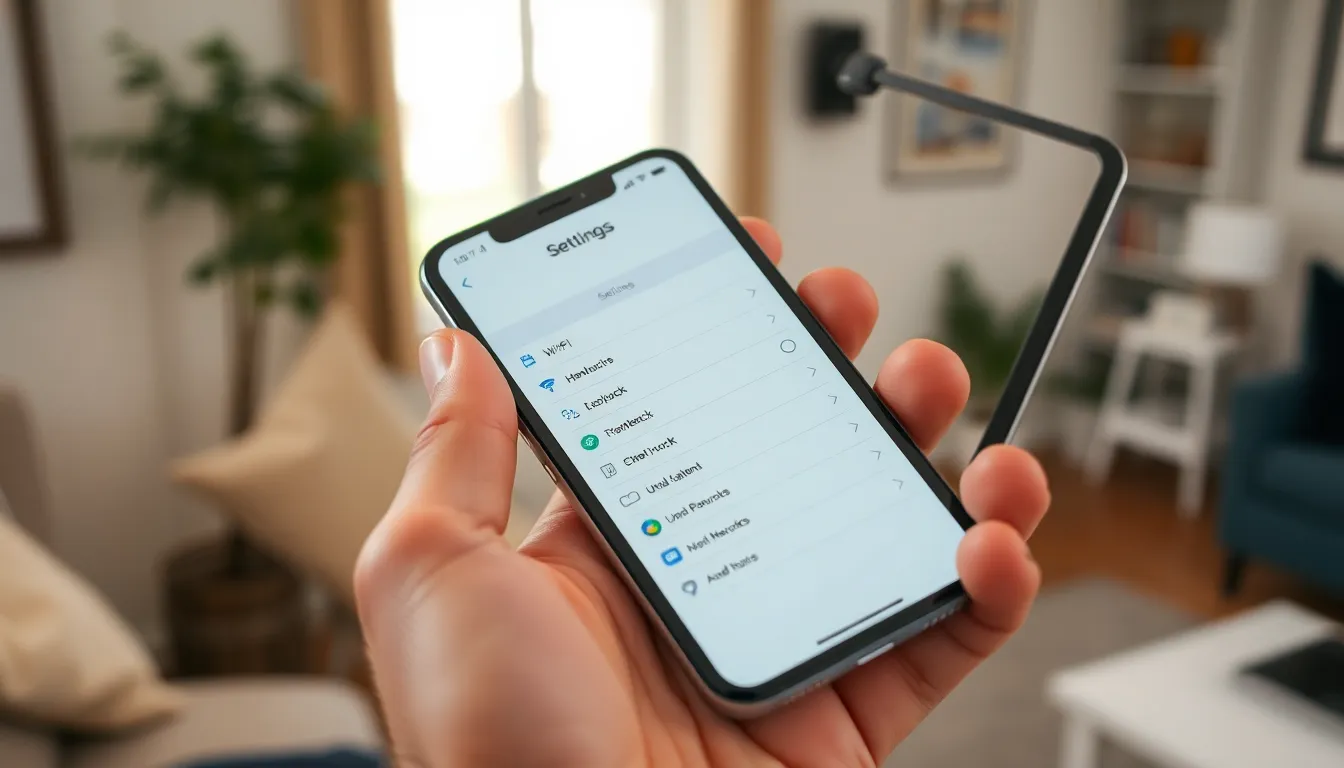
Locating WLAN settings on an iPhone facilitates easy Wi-Fi connection management. Users can quickly navigate to these options through the Settings app.
Accessing Settings App
To access the Settings app, find the gear-shaped icon on the home screen. Tapping this icon opens a menu containing various configurations. Within this menu, users can adjust settings for Wi-Fi, Bluetooth, notifications, and more. Identifying the appropriate option is straightforward, as the user interface is designed for simplicity. Users often prefer this method to manage connectivity settings directly.
Finding WLAN Network Options
Finding WLAN network options is simple. Within the Settings menu, users can tap on “Wi-Fi” to view nearby available networks. This section displays a list of detected Wi-Fi networks, each with a corresponding signal strength indicator. Users can connect to a network by selecting it and entering the password. Options such as “Auto-Join” also exist, ensuring that devices automatically connect to saved networks. Monitoring the connection status helps to maintain an optimal online experience.
Troubleshooting WLAN Issues on iPhone
WLAN connectivity issues can disrupt online activities on an iPhone. Identifying these problems quickly leads to effective resolutions.
Common Connectivity Problems
Intermittent connections frequently occur due to weak signal strength. Users often face difficulties connecting to the selected network, which results from network congestion. Moreover, outdated software may complicate network access. Conflicting network settings also contribute to connectivity challenges, leading to frustrations when trying to stay online. These problems affect the overall user experience and warrant timely attention.
Solutions to WLAN Problems
Updating the iPhone’s software can resolve many connectivity issues. Restarting the device often restores a poor connection and ensures a fresh start. Resetting network settings clears conflicting configurations and allows for a clean slate. Forgetting the problematic network and reconnecting also helps, as it ensures correct password entry. Additionally, relocating closer to the router improves signal strength. Checking for interference from other devices may further enhance connectivity.
Tips for Managing WLAN on iPhone
Managing WLAN on an iPhone involves simple yet effective strategies to enhance connectivity and user experience.
Customizing WLAN Preferences
Users can customize WLAN preferences through the Settings app. They find the “Wi-Fi” option and tap it to access available networks. Connecting to a preferred network involves selecting it and entering the required password. Instead of connecting manually each time, users activate the “Auto-Join” feature for saved networks. This feature allows automatic reconnections whenever in range. Additionally, toggling the “Forget This Network” option helps with problematic connections by allowing users to reset their access. Personalizing the order of preferred networks can also streamline access to frequently used Wi-Fi.
Optimizing WLAN Performance
Optimizing WLAN performance on an iPhone ensures smooth browsing and streaming experiences. First, users should keep their iOS updated, as new software often includes crucial fixes. Restarting the device can resolve temporary glitches that may disrupt the WLAN connection. Reducing interference, such as moving closer to the router, increases signal strength significantly. Network congestion can also affect connectivity; switching to a less populated channel on the router might alleviate this issue. For persistent problems, users access the “Reset Network Settings” option, which restores default settings for better performance.
Finding WLAN settings on an iPhone doesn’t have to be a daunting task. With a few simple steps in the Settings app users can easily connect to Wi-Fi networks and manage their connectivity preferences. By familiarizing themselves with the Wi-Fi section users can not only enhance their online experience but also troubleshoot any issues that may arise.
Staying proactive about monitoring connection quality and making necessary adjustments can lead to a smoother and more reliable internet experience. With these tips in mind users are well-equipped to navigate WLAN settings effectively and enjoy seamless connectivity on their iPhones.


